Tuesday, July 31, 2018

Discussing Change Models, Diagnostic Instruments, and Specific Change Interventions, Part 2


           Last month we began our discussion of change models, diagnostic instruments, and interventions by examining theories, models, or interventions advocated by Argyris (1970), Chapman (2002), French, Bell, Jr., and Zawacki (2005), Kotter (1995), Lester and Parnell (2002), and Mento, Jones, and Dimdorfer (2002).  It became clear the process of change requires a thoughtful, systemic approach.  This month’s discussion will focus on benchmarking, the balanced scorecard, and dialogue.
          To measure the effectiveness of an organization’s strategies and performance, benchmarking allows the organization to make determinations based on internal and external variables.  In this way, benchmarking becomes an essential element within the total quality management (TQM) system.  TQM is grounded in the methods and theories posited by Shewhart (1931), Juran, (1951), Deming, (1982), and others.  Benchmarking allows identification of best practices that can then be adopted, implemented, or replicated.  Effective benchmarking is actually a seven-phase process (Freytag & Hollensen, 2001):
1. identify the functions to be benchmarked, 

2. rank the importance of each subject area,

3. consider the area/criteria against whom to benchmark,

4. collect data related to the actual benchmark,

5. identify gaps in desired performance,

6. seek to learn from the best-in-class, which is called “bench-learning”,

7. implement changes, which is called “bench-action”.
Benchmarking, bench-learning and bench-action must be part of an ongoing, continuous improvement strategy within the change management process (Freytag and Hollensen, 2001).  Benchmarking allows an organization to move beyond traditional policies and procedures.  The ideal result of benchmarking is the opportunity for an organization to evolve and continuously learn.  This makes effective benchmarking a double loop process, which is beneficial for any organization’s change plan.  Based on assessment results and analysis of data, an effective intervention can be selected to either further develop or improve the organization. 

The balanced scorecard and dialogue are two of the most utilized intervention models.  The balance scorecard measures financial, marketing, production, organizational development, and new product development factors so the organization’s senior managers can achieve a holistic perspective and thereby plan more effectively.  Kaplan and Norton (1992) assert the following four steps must be part of the balanced scorecard design process:

  1. Translate the vision into operational goals.
  2. Communicate the vision and link it to individual performance.
  3. Begin business planning and index setting
  4. Review feedback and learning and then adjust the strategy accordingly.
          The steps extend beyond simply identifying financial and non-financial measures.  The balanced scorecard is intended to illustrate and consider the design process within broader thinking about how the results can be integrated with the wider business management process.  Other than improving the focus of management and change agents, the balanced scorecard (Kaplan & Norton, 1992) has no direct role in the formation of strategy.  
         One benefit of the balanced scorecard model is that it can effectively co-exist with strategic planning systems or other tools that support strategic change.  Using the Balanced Scorecard, the evaluation process would include pre- and post-measurement that assesses core methods used across my change project as well as the specific measures that were developed for each initiative.  The balanced scorecard thereby assesses overall organizational effectiveness, which promote strategic focus such as: return on investment, more cost- effective utilization of assets, recognition of how to work within operating margins, comprehension of profitability and liquidity, and development of a matrix that identifies the value-added per employee (Karanthanos & Karanthanos, 2005).
          As an intervention for change, dialogue should be treated as an act of listening, talking, and thinking together.  As a result of the wisdom and insight of the group’s collective mind, dialogue sets the stage for action (Issacs, 1999).  Given this, Issacs believes personal, corporate, and political communication can provide a process of thinking together and forming consensus.  This is in contrast to thinking alone and then trying to convince others of a position.  There are many diverse resources providing listening and speaking strategies to promote change initiatives.  Wheatley (2002) is widely quoted for her belief that “Human conversation is the most ancient and easiest way to cultivate the conditions for change – personal change, community and organizational change, planetary change.” 
          The utilization of dialogue as a tool in the process of organizational change does not substitute for planning.  Rather, dialogue should inform development of strategic and coordinated actions.  Strategic dialogue should embed diversity and equity concerns within the organization’s normal planning and development processes.  Strategy dialogue actively enlists the people who are involved in the real work of the organization and whose jobs are directly impacted by decisions made by upper management.  Strategic dialogue recognizes and leverages the knowledge and the potential power of the organization as an outcome of increased collaboration and focus upon the organization’s future.  
          When practicing and utilizing essential guidelines for dialogue, community is created and the organizational culture behaviorally, experientially, and attitudinally transformed.  The ten essential guidelines for dialogue were identified by Gerard and Teurfs (1995):

  1. Listening and speaking without judgment
  2. Acknowledgment of each speaker
  3. Respect for differences
  4. Role and status suspension
  5. Balancing inquiry and advocacy
  6. Avoidance of cross-talk
  7. A focus on learning
  8. Seeking the next level of understanding
  9. Releasing the need for specific outcomes
  10. Speaking when " moved " (para 29).
          Ideally, these discussions solidified the realization that the change process requires a thoughtful, systemic approach.  Because the change models, assessment tools, and change interventions identified and discussed in part 1 and part 2 are widely utilized, further research is warranted to explore and evaluate their efficacy.  Crucially, given the many diverse change models, assessment tools, and options for interventions, a prospective change leader must research and understand how to select and utilize these tools to optimally diagnose the organization’s problems in relation to its leadership and stakeholders.  Only then, can a leader exhibit integrity toward his or her role and responsibility as an effective agent of change. 
 

To cite:
Anderson, C.J. (July 31, 2018) Discussing change models, diagnostic instruments, and specific change
interventions, part 2.  [Web log post] Retrieved from http://www.ucan-cja.blogspot.com/
References
Argyris, C. (1970). Intervention theory and method: A behavioral science view. Reading, Mass.:
             Addison-Wesley
Beitler, M.A. (20030. Strategic organizational change.  Greensboro, NC: Practitioner Press
International
Chapman, J. A. (2002). A framework for transformational change in organizations. Leadership
& Organizational Development Journal, 23(1), 16-25.
Covey, S. R. (1989). The 7 habits of highly effective people: Restoring the character ethic. New
                York: Free Press
Englehardt, C. S., &; Simmons, P. R. (2002). Organizational flexibility for a changing world.
                Leadership & Organizational Development Journal, 23(3), 113-121
French, W., L., Bell, Jr., C., H., Zawacki, R., A. (2005). Organization development and
                transformation: Managing effective change (6th ed.). NYC: McGraw-Hill
Freytag, P. V., & Hollensen, S. (2001). The process of benchmarking, benchlearning and
                benchaction. TQM Journal, 13(1), 25-33.
Gerard, G. &; Teurfs, L. (1995). Dialogue and Organizational Transformation. Retrieved from
                http://www.visionnest.com/btbc/cb/chapters/dialogue.htm#2
Hughes, M. (2007). The tools and techniques of change management. Journal of Change
                Management, 7(1), 37-49. doi:10.1080/14697010701309435
Isaacs, W. (1999). Dialogue and the art of thinking together. New York, Doubleday
Jacobson, R.D. (2000). Leading for a change: How to master the 5 challenges
                faced by every leader. Boston, MA: Butterworth Heinemann
Karanthanos, D., & Karanthanos, P. (2005). Applying the balanced scorecard to education.
                Journal of Education for Business, 80(4), 222-230.
Kaplan, R. S., & Norton, D. P. (1991). The balanced scorecard -- Measures that drive
performance. Harvard Business Review, 69(1), 71-79.
Kaplan, R. S., & Norton, D. P. (1996). Using the balanced scorecard as a strategic management
                system. Harvard Business Review, 74(1), 75-85.
Koehn, D.J. (2007) Organizational transformations – enabling and sustaining change.
Retrieved from http://www.decpath.com/CALM.pdf
Kotter, J.P., (1995) Leading change: Eight ways organizational transformations fail.
Harvard Business Review, 73(2), 59-67.
Lester, D. L., & Parnell, J. A. (2002). Aligning factors for successful organizational renewal.
                Leadership & Organizational Development Journal, 23(2), 60-67.
Mento, A. J., Jones, R. M., & Dimdorfer, W. (2002). A change management process: Grounded
in both theory and practice. Journal of Change Management, 3(1), 45–59.
Wheatley, M.J. (2002). Turning to one another: Simple conversations to restore hope to the
                future. San Francisco: Berrett-Koehler


Saturday, June 30, 2018

Discussing Change Models, Diagnostic Instruments, and Specific Change Interventions, Part 1


The synthesis between selected change models, identification of appropriate diagnostic instruments, and utilization of specific change interventions should allow a leader to effectively intervene, facilitate, and support change.  Intervention Theory (Argyris, 1970) posits, “to intervene is to enter into an ongoing system of relationship, to come between or among persons, groups or objects for the purpose of helping them” (p. 115).  This understanding allows the effective change leader to seek to clearly understand the problem and need for change.  While the rationale and motivation often ranges from helping followers make their own decisions about the kind of help they need to coercing followers to do what the change leader determines is necessary for them to do, the change leader should assist “any system become more effective in problem solving, decision making, and decision implementation in such a way that the system can continue to be increasingly effective in these activities and have a decreasing need for the change leader thereafter” (p. 117). 

A basic condition of Intervention Theory (Argyris, 1970) is the need for valid information because “without valid information, it would be difficult for the client/individual to learn and for the interventionists to help” (p. 118).  A second basic condition assumes the intervention should be designed and executed to promote discreteness and autonomy, which promotes the necessity for free, informed choice.  Lastly, Argyris believed commitment to the learning and change processes must be more than temporary but rather “durable in the sense that it can be transferred to relationships in and out of their immediate sphere of influence” (p. 118).  As a result, a leader proficient with change models, diagnostic instruments, and specific change interventions would be more capable of promoting these conditions. 

When planning to identify either a change model or succession plan, consideration of an ecological perspective, supportive of the interconnectedness of stakeholders and organizations, exhibits prudence and wisdom.  Six components posited by Lester and Parnell (2002) should be considered when developing a subsequent change implementation plan, especially for a family business.  The effective change leader creates a compelling vision, provides continuous communications, creates a climate of selfless effort, provides the appropriate top-down support and role modeling, and relates the needed change both to the future and to the past.  Throughout the process, the effective change leader needs to engage the major stakeholders involved in the change.

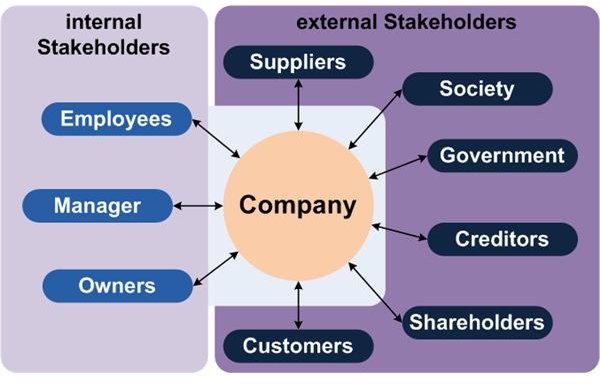
Regardless if a transformative or a gradual change is being considered, understanding the role of stakeholder groups is crucial.  Stakeholders include customers, employees, their unions, employees, the organization’s shareholders, its partners, community groups, regulatory bodies, and the competition.  Chapman (2002) notes engagement with stakeholder groups around the opportunities and goals of the change process can yield mutually beneficial results.  Minimally it can help build trust because to establish trust channels for communication and dialogue throughout the change process need to be realized.  Clear communication and greater trust often produces more openness and support for the change process.

After analyzing a multitude of change management efforts, Kotter (1995) proposed an eight-step process model for effectively guiding organizations through major changes.  This well-known model focuses on both initiating and implementing change at a strategic level.  Kotter posits the eight activities are jointly necessary while individually insufficient to bring about and sustain change.  For those seeking an alternative to change models, Connell’s Prezi (2011) graphically illustrated and exemplified the Mento, Jones, and Dimdorfer’s (2002) 12-step framework for change: 

Step 1: The idea and its context

Step 2: Define the change initiative

Step 3: Evaluate the climate for change

Step 4: Develop a change plan

Step 5: Find and cultivate a sponsor

Step 6: Prepare your target audience, the recipients of change

Step 7: Create the cultural fit —Making the change last

Step 8: Develop and choose a change leader team

Step 9: Create small wins for motivation

Step 10: Constantly and strategically communicate the change

Step 11: Measure progress of the change effort

Step 12: Integrate lessons learned

 The 12-step framework implements many tenets of previous change models.  Yet, Mento, et al., (2002) note “the 12-steps are not to be regarded only sequentially, but also as an integrated, iterative process to enable change” (p. 58).  As such, it is a normative change model. 

A normative model is prescriptive.  As such it evaluates alternative solutions to the question, "What is going on?" A normative model either suggests what needs to be done or identifies how things should be operationalized based on a prescribed standard or approach.  By contrast, descriptive models only describe proposed solutions without actually evaluating them.

French, Bell, Jr., and Zawacki (2005) researched the management of change and effectiveness of instruments available for identifying and diagnosing problems.  They cite seven basic methods for collecting information initially explicated by Fordyce and Weil (1979).  The methods were rank ordered by degree of confrontation:
  1. questionnaires 
  2. interviewing,
  3. sensing,
  4. polling,
  5. collages,
  6. drawings, and
  7. physical representation of organizations.

 By their general nature, questionnaires are relatively impersonal since respondents remain confidential.  By contrast, physical representation is highly confronting.  French et al., (2005) suggest “the more confronting the method, the richer the response and the stronger the impulse to change” (p. 162).

                As we are learning, the process of change requires a thoughtful, systemic approach.  While the researched change models, assessment tools, and change interventions identified and discussed herein are widely utilized, there are others yet to be explored and evaluated. During part 2 of this discussion next month, we will review benchmarking, the balanced scorecard, and dialogue.  Benchmarking allows identification of best practices that can then be adopted, implemented, or replicated.  The balanced scorecard and dialogue are two of the most utilized intervention models.

To cite:
Anderson, C.J. (June 30, 2018) Discussing change models, diagnostic instruments, and specific change
       interventions, part 1. [Web log post] Retrieved from http://www.ucan-cja.blogspot.com/

References
Argyris, C. (1970). Intervention theory and method: A behavioral science view. Reading, Mass.:
         Addison-Wesley
Chapman, J. A. (2002). A framework for transformational change in organizations. Leadership
        & Organizational Development Journal, 23(1), 16-25.
French, W., L., Bell, Jr., C., H., Zawacki, R., A. (2005). Organization development and   
        transformation: Managing effective change (6th ed.). NYC: McGraw-Hill
Kotter, J.P., (1995) Leading change: Eight ways organizational transformations fail. Harvard Business
       Review,  73(2), 59-67.
Lester, D. L., & Parnell, J. A. (2002). Aligning factors for successful organizational renewal.
         Leadership & Organizational Development Journal, 23(2), 60-67.
Mento, A. J., Jones, R. M., & Dimdorfer, W. (2002). A change management process: Grounded in
       both theory and practice. Journal of Change Management, 3(1), 45–59.


Thursday, May 31, 2018

Developing a Collaborative Learning Culture


Let’s discuss strategies for promoting collaborative teams, especially professional learning communities.  In the endeavor to develop and sustain a collaborative learning culture, effective leaders should seek to mitigate informational overload.  Effective leaders know that reducing stress and fear optimizes organizational learning and success. 
An effective school collaboratively reaches consensus on the mission, core values, and beliefs (Lezotte & Snyder, 2011).  Thereafter, collective inquiry is effective for building shared knowledge.  This process, “in turn, allows them to make more informed (and therefore better) decisions, and increases the likelihood they will arrive at consensus” (DuFour, DuFour, & Eaker, 2008, p. 17).  Despite the benefits of a collaborative professional learning community (PLC), the authors were “convinced educators would benefit from both greater clarity regarding the PLC concept and specific strategies for implementing the concept” (p. 15).
Effective communication promotes collaboration, thereby optimizing the learning organization’s ability to reach consensus.  Schmoker (1999) posited teams outperform individual efforts, therefore, "learning not only occurs in teams but endures" (p. 12).  An effective learning organization utilizes the following three beliefs to optimize teams and the PLC concept:
1.       the team believes strongly in each member's capacity to develop practical solutions to everyday teaching and learning problems;
2.       there is a belief that regardless of a school's social or economic circumstances, improvement can and will occur;
3.       the team arrives at each meeting anticipating that informed trial and error will inevitably lead to better teaching and hence to higher learning (Schmoker, 1999, p.20).
Educators benefit in a number of ways from working together to identify a clear, shared vision, developing a collaborative culture focusing on learning, engaging in collective inquiry, remaining action oriented, committing to continuous improvement, and being results oriented (Dufour et al., 2008).  Those six elements of an effective PLC promote learning by doing.  As with many processes developed for sustaining success, the six elements work most effectively if treated as an interdependent, cyclical process. 
To be successful, the PLC requires “reculturing the traditional culture of schools and districts” (Dufour et al., 2008, p. 6).  This shift needs to be systemic and not merely structural, embedding sustained improvements in “the assumptions, beliefs, values, expectations, and habits that constitute the norm for that organization” (p. 90).  A skillful educational leader begins developing an effective collaborative culture by understanding the interdependency of the improvement process rather than merely undertaking elemental processes for change.  A skillful educational leader and empowered educators trust in non-negotiable goals (NNGs) and values while embracing both school-based and teacher autonomy. 
An effective leader can create a defined collaborative culture to optimize structured organizational learning by utilizing strategies that encourage high levels of effectiveness.  The first pursuit in this endeavor is to mitigate learning overload.  Information overload prevents stakeholders from realizing progress and achievement of stated goals (Nguyen, 2011; Reason, 2010).  Citing Kennedy (2006) and Franklin (2005), Reason (2010) notes, “We can’t alter the brain to hold more information, but we can change our approach to learning in ways that reduce overwhelm and prepare us to deal with institutional challenges more effectively” (p. 99).  Every stakeholder’s reticular activating system (RAS) impacts his or her attention and motivation.  Therefore, the RAS influences how efficiently staff addresses the organizational focal points.  The effective leader recognizes this and seeks to “clearly identify the learning focal points that matter” (p. 100) as a way to mitigate stressors that overwhelms one’s perception and attention to organizational focal points. 
Learning organizations are expected to attend to what Vygotsky called scientific concepts (Blunden, 2009; Tudge & Scrimsher, 2003).  Scientific concepts are psychological tools such as language, formulas, memory techniques, concepts, rules, symbols, and signs.  Properly designed class instruction utilizes and learns these psychological tools, thereby reducing learning overload by optimizing metacognition (Bohlin et al., 2008)
In the pursuit of defining a learning culture, effective leaders also seek to optimize structured organizational learning by utilizing a proven system for promoting change.  The following eight-step protocol (Reason, 2010), promotes success while reducing learning overload:

Step One: Acknowledging Learning Limits
Step Two: Lightening the Learning Load
Step Three: Identifying Learning Focal Points
Step Four: Establishing Emotional Relevance
Step Five: Establishing Inquiry
Step Six: Identifying Essential Goals and Outcomes
Step Seven: Making the Focal Points Public
Step Eight: Funneling New Ideas Into Current Focal Points (pp. 103-112)
“The identification of learning focal points, empowering questions, and must-have outcomes won’t reduce all the confusion in an organization” (Reason, 2010, p. 112).  However, the above protocol optimizes the learning organization’s ability to prioritize elements essential for promoting student learning and sustaining success.  Clarity and focus mitigates fear and stress, thereby improving the organization’s culture of learning while reducing learning overload. 
The improvement to the collaborative learning culture begins with recognizing promotion of student learning in schools that are loosely-coupled by design must be tightly-coupled in relation to non-negotiable goals (NNGs).  Beginning with district leadership, a culture based on “defined autonomy” (Marzano & Waters, 2010, p. 8) communicates NNGs to both the internal and external stakeholders.  Otherwise, change can be either slow, inconsistent, or nonexistent.
An effective educational leader confidently handles the conveyance of more autonomy or degrees of freedom.  Therefore, novice principals or leaders at struggling schools need more guidance and direction from district-level leaders.  An effective leader recognizes when and how staff can work autonomously and collaboratively, thereby developing or removing staff as necessary, which promotes the culture of high expectations within the school (Eck & Goodwin, 2010).
Purpose driven inquiry (Reason, 2010) can be utilized with either small groups or the entire school.  Reason presented a six-step protocol useful for small and systemic projects alike:

Step One: Identifying the Question and Knowing Why We Ask It
Step Two: Igniting Collective Curiosity
Step Three: Defining Strategic Action
Step Four: Defining Accountability
Step Five: Making the Agenda Public
Step Six: Maintaining Engagement (pp. 78-86)
Establishment of non-negotiable goals (NNGs) are a product of earlier collaboration.  Intentional invitations promote staff empowerment (Purkey & Novak, 2016).  Determination to collaborate, time to meet, willingness to ask serious questions, creation of an action plan, and always meeting with an agenda, promotes collaborative communication aligned to the established NNGs.  Therefore, Reason’s (2010) six-step protocol for purpose driven inquiry mitigates learning overload while encouraging collaborative learning organizations to focus upon sustained improvement, efficient learning, and sustained success. 
Effective accountability requirements hastened the emergence of professional learning communities (PLC).  Marzano and Waters (2009) believe, a PLC “suggests a group of people sharing and critically interrogating their practice in an ongoing, reflective, collaborative, inclusive, learning oriented, growth-promoting way; operating as a collective enterprise” (p. 56).  The PLC and undertaken action research addresses the need to develop and sustain a systemic culture of continuous improvement that promotes positive learning (DuFour, et al., 2008; Rentfro, 2007). 
Positive change can be the outcome of innovative thinking, willingness, humility, collaboration, and a collective vision grounded in a clearly-defined mission.  Unintended consequences, which often fall into the pool labeled “negative change,” typically ignore the characteristics connected with positive change.  In conclusion, leaders interested in promoting a collaborative learning culture must embrace this reality: It is not enough to want to change or need to change, to become enculturated within an organization, stakeholders must experience positive change.
 
To cite:
Anderson, C.J. (May 31, 2018) Developing a collaborative learning culture [Web log post] Retrieved


References
Bohlin, L., Durwin, C., & Reese-Weber, M. (2008). Ed psych: Modules. NY: McGraw-Hill.
DuFour, R., DuFour, R., & Eaker, R. (2008). Revisiting professional learning communities at
                work: New insights for improving schools. Bloomington, IN: Solution Tree Press.
Eck, J., & Goodwin, B. (2010). Autonomy for school leaders. School Administrator, 67(1),
24-27.
Lezotte, L. W., & Snyder, K. M. (2011). What effective schools do: Re-envisioning the
                correlates. Bloomington, IN: Solution Tree Press.
Marzano, R. & Waters, T.(2009). District leadership that works. Bloomington, IN: Solution
                Tree Press
Purkey, W. W., & Novak, J.M. (2016). Fundamentals of invitational education (2nd ed). The International
Alliance for Invitational Education. Retrieved from:
Reason, C. (2010). Leading a learning organization: The science of working with others. Bloomington, IN:
Solution Tree Press.
Schmoker, J, (1999) The Key to Continuous School Improvement (2nd ed.) Arlington, VA:
ASCD
Tudge, J., & Scrimsher, S. (2003). Lev S. Vygotsky on education: A cultural-historical,
                interpersonal, and individual approach to development. In B. J. Zimmerman &
D. H. Schunk (Eds.), Educational psychology: A century of contributions
(pp. 207–228) Mahwah, NJ: Erlbaum.